






If you own or manage an e-commerce business, you know how crucial it is to have a reliable and efficient inventory distribution solution in place. With the e-commerce industry expected to reach $8.6 trillion by 2026, competition is fiercer than ever. This growth means that businesses must adapt quickly to meet customer demands while maintaining operational efficiency. One viable option to consider is partnering with a 3PL company, or third-party logistics provider. These companies can handle various logistics needs, allowing you to focus more on your core business activities and less on the complexities of fulfillment and shipping logistics. To help with this, we have compiled a list of the Best 3PL Companies that can support your e-commerce needs. The Best 3PL Companies provide comprehensive solutions that streamline your operations.
Understanding the role of logistics in your supply chain is essential. The Best 3PL Companies can offer you insights and services that will enhance your operational efficiency. With the Best 3PL Companies at your side, you can optimize your logistics strategy.
Key strengths considerations, choosing the right 3PL partner can be a game changer for your e-commerce business. By taking the time to research and find a 3PL that aligns with your business goals and offers the services you need, you can set your business up for long-term success. Remember to assess their track record, technology, and additional services to ensure you are making an informed decision. As the e-commerce landscape continues to evolve, having a reliable logistics partner, especially the Best 3PL Companies, can make all the difference in achieving your business objectives.
As you evaluate potential for warehouses software partners be sure to consider their technological capabilities. Automation and technology play a significant role in modern logistics. Look for companies that utilize advanced software for inventory management, order tracking, and customer communication. This technology can facilitate smoother operations, minimize errors, and ultimately improve your customer service.
Moreover, sustainability has become an increasingly important factor in logistics. Many consumers prefer brands that demonstrate environmental responsibility. Some 3PL providers now offer warehouses software partners discounts integrations and green logistics options, such as carbon-neutral shipping or eco-friendly packaging solutions. Partnering with a 3PL that prioritizes sustainability can not only enhance your brand image but also attract eco-conscious consumers.
In addition to the core logistics functions, many 3PL companies are beginning to offer value-added services that can further enhance your e-commerce operations. These may include packaging and labeling services, returns management, and even marketing support. By choosing a 3PL that provides these additional services, you can create a more streamlined experience for your customers, which can lead to higher satisfaction and repeat business.
Understanding the services offered by different 3PL companies is crucial for making an informed decision. Evaluate their capabilities, such as storage options, shipping methods, technology integration, and customer support services. Some 3PL providers might offer specialized services, like temperature-controlled warehousing for perishable goods, while others excel in rapid shipping for high-demand consumer products. The better you understand software partners discounts integrations customer these services, the more effectively you can align them with your business needs and growth strategies.
Why Choose the Best 3PL Companies for Your E-commerce Needs?
These companies specialize in providing shipping and logistics services to businesses and can offer a range of benefits that can help you grow and streamline your operations. For instance, by leveraging their established networks, you can access better shipping rates and faster delivery times. However, not all 3PL companies are created equal; it’s essential to do your research and find the right fit for your specific business model. Look into their tracking systems, reliability scores, and customer testimonials to gauge their performance.
This is where deep industry knowledge and a flexible, efficient approach can really make a difference. A 3PL company with a proven track record of helping businesses like yours succeed can be a valuable asset. They can provide timely and cost-effective solutions, such as optimized shipping routes and inventory management techniques, that free up your time and resources to focus on other aspects of your business. For example, some companies offer advanced analytics tools to help you better understand shipping costs and customer preferences, allowing for more strategic decision-making.
Whether you’re just starting out or have been in business for a while, outsourcing your shipping and order fulfillment to a 3PL company can help you grow and scale your operation. By leveraging the marketing power of an online store and the expertise of a 3PL provider, you can reach more customers and streamline your operations. This allows for a more agile business model, where you can quickly adapt to market changes or seasonal demands. Many 3PL companies also offer scalable solutions, making it easy to adjust your logistics strategy as your business grows.
Whether you’re looking to import products and ship them to customers around the world or simply need a comprehensive fulfillment platform to manage the shipment process and keep track of stock levels, a 3PL company can help. With automatic notifications and real-time updates, you can stay on top of your inventory and keep your business running smoothly. Some 3PL providers also offer integrated solutions that include e-commerce platforms, allowing for seamless inventory management and order processing directly through your online store.
| Company | Pros | Cons |
|---|---|---|
| DHL Supply Chain | • Global presence in 50+ countries • Strong warehousing and supply chain management • Good training and advancement opportunities • Strong healthcare, automotive, and e-commerce expertise | • Pay can vary significantly by location• Warehouse roles can be physically demanding • Large corporate structure may mean slower decision-making |
| XPO Logistics | • Strong LTL freight network • Technology-driven operations • Competitive compensation in many markets • Fast-growing company with promotion opportunities | • Performance metrics can be demanding • High-pressure environment in some terminals • Work-life balance varies by position |
| UPS Supply Chain Solutions | • Backed by UPS’s global transportation network • Strong reputation and stability • Good benefits package • Excellent international shipping capabilities | • Corporate bureaucracy can be frustrating • Advancement can be competitive • Some facilities report mandatory overtime during peak seasons |
| C.H. Robinson | • One of the largest freight brokerages in North America • Strong sales training programs • Entrepreneurial culture• Large carrier network | • Sales positions can be highly stressful • Compensation often tied to performance • Competitive environment may not suit everyone |
| FedEx Logistics | • Strong global brand recognition • Diverse logistics services • Good employee benefits • International freight forwarding expertise | • Organizational changes have created uncertainty at times • Workload can spike during peak shipping periods • Advancement opportunities vary by location |
Best Overall By Category
🏆 Best Stability: UPS Supply Chain Solutions
🏆 Best Global Supply Chain Operations: DHL Supply Chain
🏆 Best Technology & Growth: XPO Logistics
🏆 Best Sales Career Potential: C.H. Robinson
🏆 Best International Freight & Shipping: FedEx Logistics
Below are fictional but realistic case studies demonstrating when a company might choose each logistics provider.
Case Study 1: DHL Supply Chain
Industry: Medical Device Manufacturing
Challenge
A medical device manufacturer was experiencing inventory shortages, delayed shipments, and rising warehouse costs across North America and Europe.
Solution
The company partnered with DHL Supply Chain to manage its warehousing, inventory control, and transportation network. DHL implemented a centralized inventory management system and operated regional distribution centers.
Results
- Reduced inventory carrying costs by 18%
- Improved order fulfillment accuracy to 99.8%
- Reduced average delivery times by 2 days
- Increased customer satisfaction and repeat orders
Why DHL Was Chosen
The manufacturer needed a global supply chain partner capable of handling regulated healthcare products and international distribution.
Case Study 2: XPO Logistics
Industry: Home Improvement Retailer
Challenge
A regional home improvement chain struggled with delivering oversized products such as appliances, cabinets, and flooring materials to customers.
Solution
The retailer partnered with XPO Logistics to manage last-mile delivery and LTL freight operations. XPO implemented route optimization software and real-time shipment tracking.
Results
- Reduced delivery costs by 15%
- Increased on-time delivery performance to 97%
- Improved customer visibility through tracking technology
- Reduced damaged shipments by 22%
Why XPO Was Chosen
The retailer required specialized handling for large, bulky products and a strong domestic transportation network.
Case Study 3: UPS Supply Chain Solutions
Industry: E-Commerce Consumer Products
Challenge
An online retailer experienced rapid growth and needed a scalable fulfillment and international shipping solution.
Solution
The company partnered with UPS Supply Chain Solutions to manage order fulfillment, inventory storage, customs documentation, and international shipping.
Results
- Expanded sales into 15 new countries
- Reduced international shipping delays by 35%
- Increased order processing capacity by 50%
- Improved inventory visibility across all channels
Why UPS Was Chosen
The retailer wanted a single provider capable of handling warehousing, customs, and global transportation.
Case Study 4: C.H. Robinson
Industry: Food Distribution
Challenge
A food distributor needed to move fresh produce from farms to grocery stores nationwide while minimizing spoilage and transportation costs.
Solution
The distributor engaged C.H. Robinson to source refrigerated trucking capacity from its carrier network. C.H. Robinson’s brokerage platform matched loads with qualified carriers in real time.
Results
- Reduced transportation costs by 12%
- Increased truck availability during peak seasons
- Reduced spoilage losses by 20%
- Improved delivery consistency nationwide
Why C.H. Robinson Was Chosen
The company required flexible access to thousands of transportation providers rather than owning dedicated transportation assets.
Case Study 5: FedEx Logistics
Industry: Electronics Manufacturer
Challenge
An electronics company imported components from Asia and exported finished products worldwide. Customs delays and inconsistent freight management were impacting production schedules.
Solution
The company partnered with FedEx Logistics to manage international freight forwarding, customs brokerage, and cross-border transportation.
Results
- Reduced customs clearance times by 40%
- Improved production scheduling reliability
- Reduced international transit times by 15%
- Lowered freight administration costs
Why FedEx Logistics Was Chosen
The manufacturer needed expertise in international trade, customs compliance, and global freight forwarding.
Which Company Would Fit Your Needs Best?
Exploring Third-Party Logistics: Benefits and Types for Businesses
| Need | Best Company |
|---|---|
| National marketing material distribution | UPS Supply Chain Solutions |
| International expansion | DHL Supply Chain |
| Managing trade show materials and displays | FedEx Logistics |
| Freight brokerage and transportation sourcing | C.H. Robinson |
| Large-scale domestic warehousing and fulfillment | XPO Logistics |
Definition and Overview
What is Third-Party Logistics?
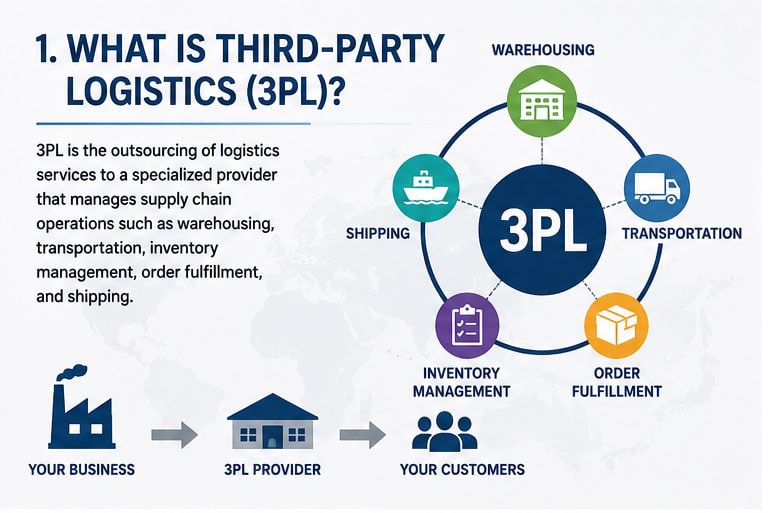
Third-party logistics (3PL) refers to the outsourcing of logistics services to a third-party business that specializes in integrated operations, warehousing, and transportation services. These services can encompass a variety of tasks, including inventory management, order fulfillment, and shipping. By leveraging the logistics expertise and resources of a 3PL provider, businesses can streamline their supply chain processes and focus on their core competencies.
3PL providers serve as intermediaries between the business and its customers, ensuring that products are delivered efficiently and effectively. This relationship allows businesses to enhance their operational capabilities without the need for extensive investment in logistics infrastructure. The rise of e-commerce has driven significant demand for 3PL services, as companies seek to meet customer expectations for fast and reliable delivery.
History and Evolution of Third-Party Logistics
The concept of third-party logistics emerged in the 1970s as businesses began to recognize the need for specialized logistics services. Initially, 3PL providers focused primarily on transportation management, but as the industry evolved, so too did their offerings. By the 1990s, the rise of technology and the internet paved the way for more sophisticated logistics solutions, including real-time tracking and inventory management systems.
Today, 3PL encompasses a broad spectrum of services, including warehousing, distribution, freight forwarding, and value-added services such as packaging and assembly. The advent of globalization and increased consumer expectations for faster delivery times have further fueled the growth of the 3PL industry, making it an essential component of modern supply chain management.
Key Components of Third-Party Logistics
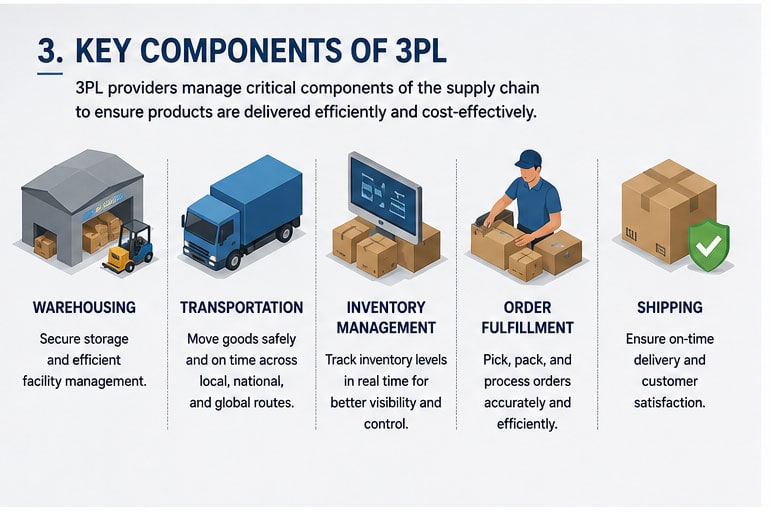
Third-party logistics consists of several key components crucial for effective supply chain management. These include warehousing, transportation, inventory management, order fulfillment, and shipping. Each of these elements plays a vital role in ensuring that goods are delivered to customers in a timely and cost-effective manner.
Moreover, 3PL providers often utilize advanced technology to optimize these components. This includes warehouse management systems (WMS), transportation management systems (TMS), and data analytics tools that help businesses gain insights into their logistics operations. By integrating these technologies, 3PL providers can improve efficiency, reduce costs, and enhance customer satisfaction.
Benefits of Third-Party Logistics
Cost Savings and Efficiency
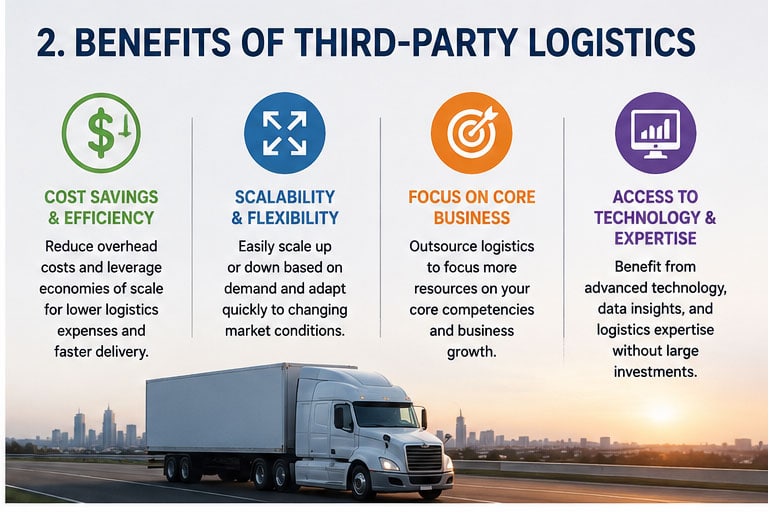
One of the most significant advantages of utilizing third-party logistics services is the potential for cost savings. By outsourcing logistics functions, businesses can reduce overhead costs associated with maintaining warehouses, hiring staff, and purchasing vehicles. 3PL providers leverage economies of scale, meaning they can offer competitive pricing due to their established networks and high volume of shipments.
Additionally, 3PL providers are skilled in optimizing logistics processes, which can lead to increased efficiency. By implementing best practices and utilizing advanced technology, they can streamline operations and reduce delivery times. This efficiency not only saves money but also enhances customer satisfaction, as faster delivery can provide a competitive edge in the marketplace.
Scalability and Flexibility
Third-party logistics providers offer businesses the flexibility to scale operations based on demand. As businesses experience fluctuations in order volume, 3PL providers can adjust their services accordingly. This scalability is particularly beneficial for seasonal businesses or those entering new markets, as it allows companies to avoid the costs associated with maintaining excess capacity during slow periods.
Furthermore, 3PL providers often have access to a wide range of resources and services that can be tailored to meet specific business needs. This flexibility enables businesses to respond quickly to changing market conditions, ensuring they remain competitive and can capitalize on new opportunities as they arise.
Focus on Core Business Functions
Outsourcing logistics functions to a third-party provider allows businesses to concentrate on their core competencies. By offloading the complexities of logistics management, organizations can redirect their focus to product development, marketing, and customer engagement, which are essential for growth and innovation.
This strategic focus can lead to improved business performance, as companies can allocate more resources and attention to areas that drive revenue. Additionally, by partnering with experts in logistics, businesses can ensure that their supply chain operations are managed efficiently, further enhancing overall performance.
Access to Advanced Technology and Expertise
Third-party logistics providers invest significantly in technology and expertise to enhance their service offerings. This means that businesses can benefit from access to the latest logistics technologies without the need for substantial capital investment. Advanced tools such as warehouse management systems, tracking software, and data analytics platforms can provide valuable insights into supply chain operations.
Moreover, 3PL providers employ logistics experts who are well-versed in industry best practices and trends. This expertise can prove invaluable for businesses looking to optimize their logistics operations. The knowledge that comes from working with established logistics professionals can lead to process improvements, increased efficiency, and better customer service.
Choosing the Right Provider
Assessing Your Business Needs
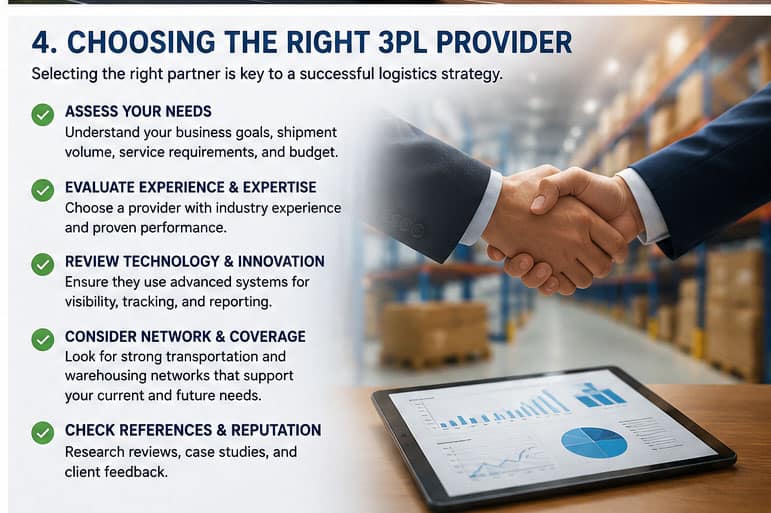
When considering a third-party logistics provider, it is essential to assess your specific business needs. Understanding your logistics requirements—such as order volume, product types, and geographical reach—can help narrow down the list of potential providers. A clear understanding of your logistics objectives will enable you to identify a partner that aligns with your goals.
Additionally, consider your company’s growth trajectory. If you anticipate significant growth or changes in demand, look for a 3PL provider that can scale operations and adapt to your evolving business needs. This forward-thinking approach will help ensure a successful partnership and long-term benefits.
Evaluating Potential Providers
Once you have identified potential 3PL providers, it is essential to evaluate their capabilities thoroughly. Consider their experience in your industry, the range of services they offer, and their reputation for reliability and customer service. Reading client testimonials and case studies can provide valuable insights into a provider’s performance and reliability.
Also, take the time to inquire about their technology capabilities. A provider that utilizes modern technology solutions can significantly enhance your logistics operations. Look for providers with robust warehouse management systems and tracking capabilities that can provide real-time visibility into your supply chain.
Questions to Ask a Third-Party Logistics Provider
Before entering a partnership with a 3PL provider, it is crucial to ask the right questions to ensure they are a good fit for your organization. Some important questions to consider include:
- What services do you provide, and can you customize them to meet our needs?
- What technology do you use to manage logistics operations?
- Can you provide references from clients in our industry?
- How do you handle challenges and disruptions in the supply chain?
- What are your service level agreements (SLAs), and how do you measure performance?
By asking these questions, you can gain a better understanding of the provider’s capabilities, reliability, and willingness to meet your business needs.
Understanding Service Level Agreements (SLAs)
Service Level Agreements (SLAs) are crucial components of any partnership with a third-party logistics provider. SLAs outline the specific services that will be provided, performance metrics, and the expectations of both parties. Understanding the terms of the SLA can help prevent misunderstandings and ensure accountability.
When reviewing SLAs, pay close attention to key performance indicators (KPIs) such as delivery times, order accuracy, and inventory management. Clear and measurable KPIs will allow you to assess the provider’s performance and identify areas for improvement. Establishing a well-defined SLA is essential for fostering a successful long-term partnership.
Establishing a Strong Partnership
Establishing a strong partnership with your third-party logistics provider is critical for achieving mutual success. Open communication, transparency, and shared goals are vital components of a successful relationship. Regular check-ins and performance reviews can help ensure that both parties are aligned and any issues are addressed promptly.
Moreover, cultivating a collaborative relationship can lead to innovative solutions and process improvements. Encourage your provider to share insights and recommendations for optimizing logistics operations. By working together, you can enhance efficiency, reduce costs, and ultimately improve customer satisfaction.
Conclusion and FAQs
Summary of Main Points
Third-party logistics (3PL) is an essential service for businesses looking to enhance their supply chain management. By outsourcing logistics functions, companies can save costs, increase efficiency, and focus on their core operations. Selecting the right 3PL provider requires a thorough assessment of business needs, careful evaluation of potential partners, and a clear understanding of SLAs.
Ultimately, forming a strong partnership with a third-party logistics provider can lead to improved operational capabilities, access to advanced technology, and better customer service. As the logistics landscape continues to evolve, businesses that leverage 3PL services will be better positioned to compete in today’s fast-paced market.
Frequently Asked Questions
- What types of businesses typically use 3PL services? Businesses of all sizes and industries can benefit from 3PL services, particularly e-commerce companies, retailers, and manufacturers looking to streamline their supply chain operations.
- How do I determine if a 3PL provider is right for my business? Assess your logistics needs, evaluate potential providers based on their capabilities and reputation, and ensure their services align with your business goals.
- What are the potential risks of using a 3PL provider? Risks can include loss of control over logistics functions, potential miscommunication, and dependency on the provider. Mitigating these risks requires establishing a strong partnership and clear communication.
- How can I effectively manage a relationship with a 3PL provider? Regular communication, performance reviews, and a collaborative approach are essential for fostering a successful partnership with your 3PL provider.
Who are the top 3PL companies?
DHL Supply Chain
XPO Logistics
C.H. Robinson
Who is the largest 3PL in North America?
XPO Logistics.
What are the top 5 logistics companies?
DHL Supply Chain
XPO Logistics
UPS Supply Chain Solutions
C.H. Robinson
FedEx Logistics
Does Costco use 3PL?
Yes, Costco uses third-party logistics (3PL) providers for various aspects of its supply chain and distribution.