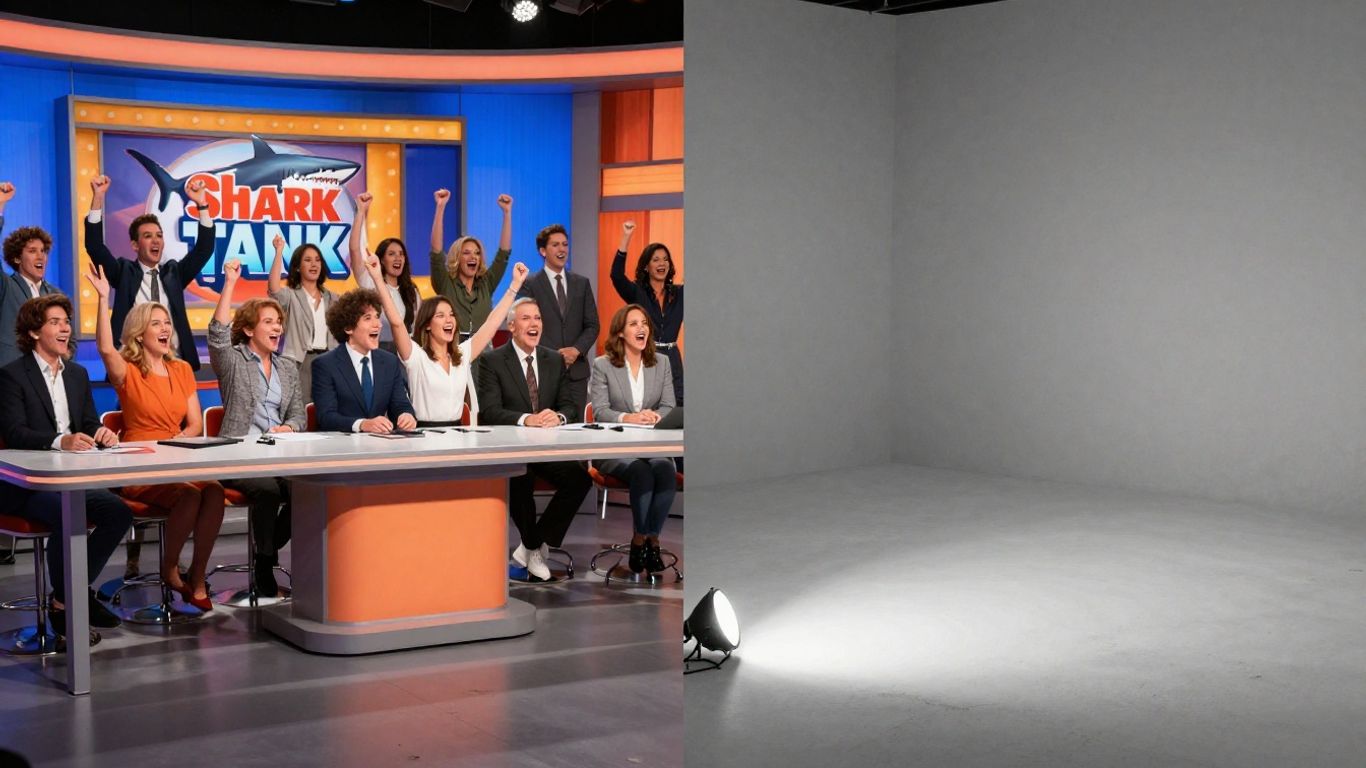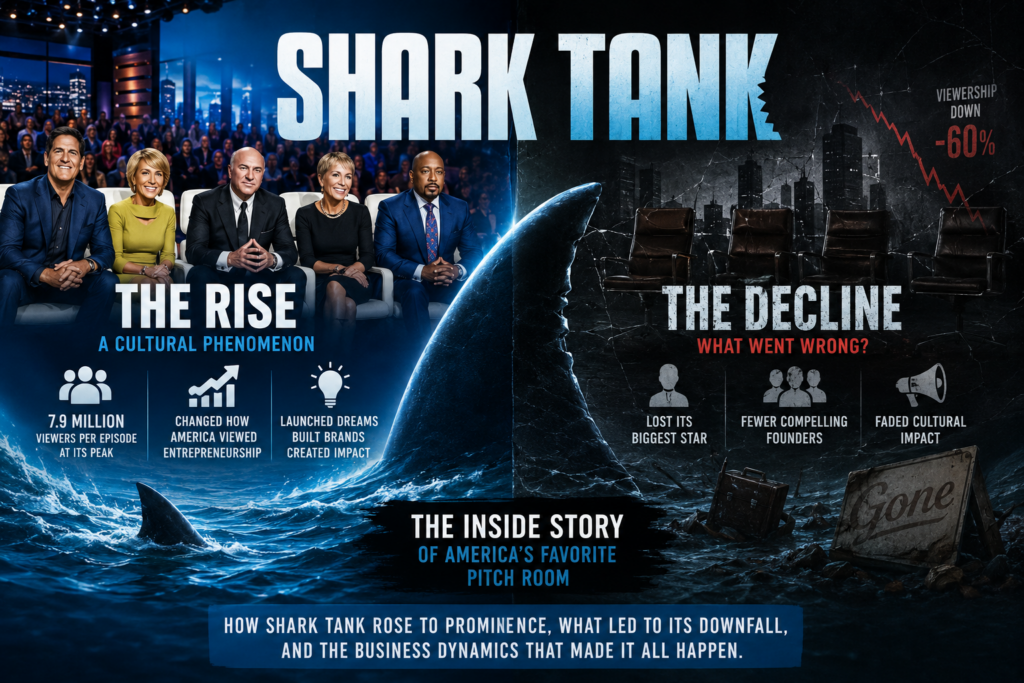





Shark Tank, once a cultural phenomenon that captivated nearly 8 million viewers per episode and reshaped how Americans viewed entrepreneurship, has seen a dramatic decline in relevance. Over a decade, the show lost its biggest star, its most compelling founders, and its cultural impact. This is the story of how Shark Tank rose to prominence, what led to its shark tanks downfall, and the business dynamics that made it all happen, leading to the shark tanks downfall that many are discussing today.
Key Takeaways
Understanding the factors contributing to the shark tanks downfall is essential for current entrepreneurs.
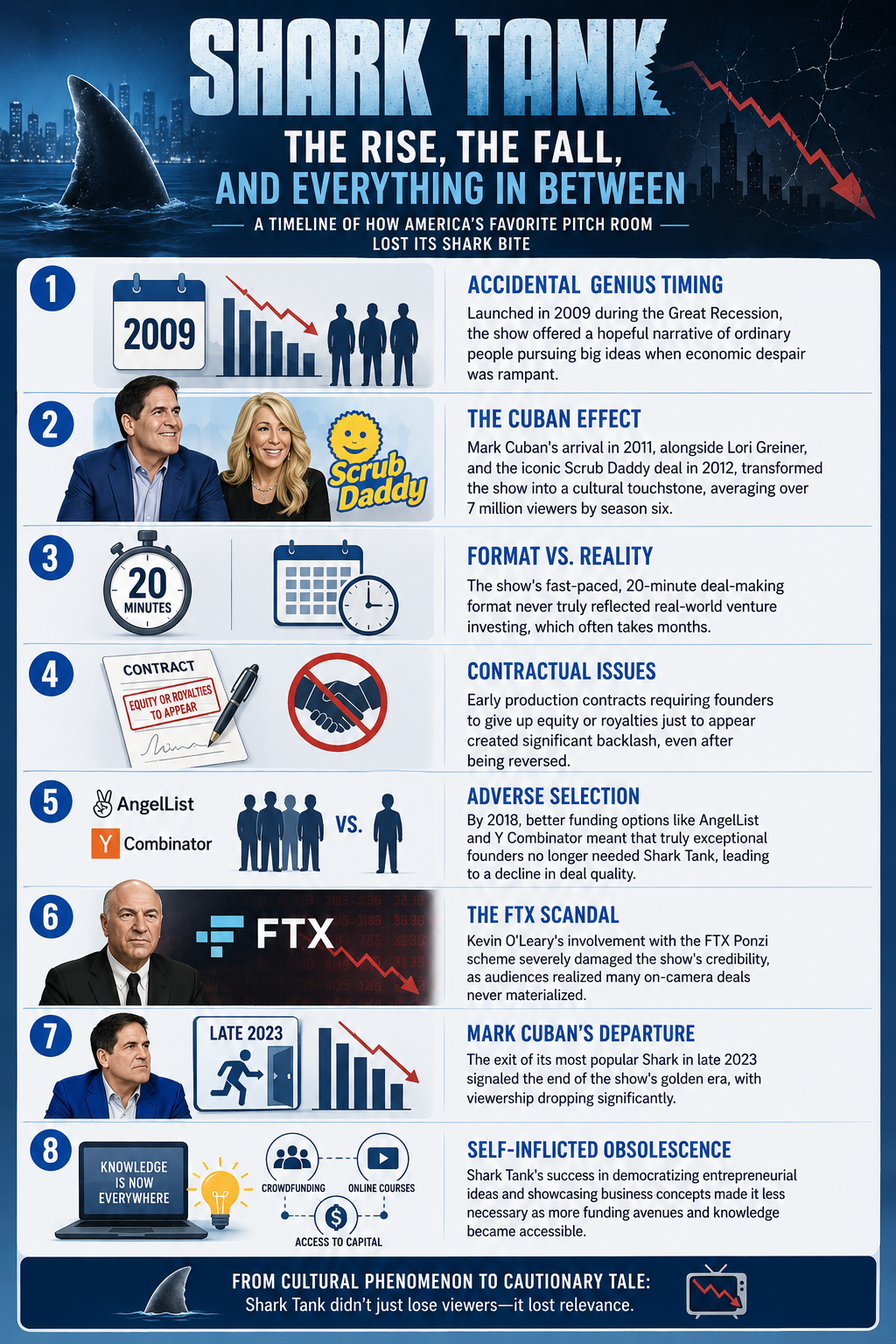
- Accidental Genius Timing: Launched in 2009 during the Great Recession, the show offered a hopeful narrative of ordinary people pursuing big ideas when economic despair was rampant.
- The Cuban Effect: Mark Cuban’s arrival in 2011, alongside Lori Greiner, and the iconic Scrub Daddy deal in 2012, transformed the show into a cultural touchstone, averaging over 7 million viewers by season six.
- Format vs. Reality: The show’s fast-paced, 20-minute deal-making format never truly reflected real-world venture investing, which often takes months.
- Contractual Issues: Early production contracts requiring founders to give up equity or royalties just to appear created significant backlash, even after being reversed.
- Adverse Selection: By 2018, better funding options like AngelList and Y Combinator meant that truly exceptional founders no longer needed Shark Tank, leading to a decline in deal quality.
- The FTX Scandal: Kevin O’Leary’s involvement with the FTX Ponzi scheme severely damaged the show’s credibility, as audiences realized many on-camera deals never materialized.
- Mark Cuban’s Departure: The exit of its most popular Shark in late 2023 signaled the end of the show’s golden era, with viewership dropping significantly.
- Self-Inflicted Obsolescence: Shark Tank’s success in democratizing entrepreneurial ideas and showcasing business concepts made it less necessary as more funding avenues and knowledge became accessible.
The Unexpected Beginning
The show’s origins trace back to Japan as “Money Tigers,” a program where wealthy businessmen critiqued entrepreneurs. This concept was licensed to the BBC and then Canada before landing in the U.S. with producer Mark Burnett at ABC in 2009. The timing couldn’t have been better. Amidst the Great Recession, with trillions in household wealth lost and public anger over Wall Street bailouts, a show about regular people with ambitious dreams offered a much-needed dose of hope and inspiration. ABC initially placed it in the summer schedule, expecting little, but it quickly found an audience.
The Rise to Phenomenon
The show truly hit its stride in 2011 with the addition of Mark Cuban and Lori Greiner to the cast. The following year, the now-famous Scrub Daddy deal – $200,000 for 20% equity, leading to over $1 billion in sales – cemented Shark Tank as a cultural phenomenon. By its sixth season, the show was pulling in over 7 million viewers per episode and winning Emmy awards. The “Shark Tank effect” became a real thing, with businesses seeing their sales multiply overnight simply by appearing on the show. Companies like Bombas, Squatty Potty, and Ring became household names thanks to this exposure.
Cracks in the Foundation
However, the very success that propelled Shark Tank also began to expose its flaws. The show’s format, designed for dramatic television, didn’t mirror the reality of business deals, which typically take months, not minutes, to finalize. This disconnect started to erode its credibility with serious business professionals. A significant PR issue arose from hidden production contracts that required founders to give up a percentage of their company or a perpetual royalty just to be on the show, regardless of whether a deal was struck. While Mark Cuban successfully pushed for these terms to be reversed in 2013, the negative perception lingered.
Adverse Selection and Lost Credibility
By 2018, a phenomenon known as adverse selection began to take hold. With the rise of platforms like AngelList, Y Combinator, and numerous local angel investor networks, talented entrepreneurs had many more avenues to secure funding. Consequently, the founders who still needed Shark Tank were often not the most promising ones, making the show less compelling for viewers seeking genuine innovation. The deals that did appear on screen became predictable, with familiar pitches and offers from the Sharks, diminishing the element of surprise and drama.
The Final Blow
The credibility of Shark Tank took a major hit in 2022 due to the Kevin O’Leary/FTX scandal. O’Leary had promoted FTX, which turned out to be a massive Ponzi scheme, for over $15 million. This association undermined the show’s premise that the Sharks were astute business minds whose advice could be trusted. Compounding this, audiences on platforms like Reddit and TikTok began scrutinizing past episodes, revealing that roughly half of the deals announced on camera never actually closed. The show, once perceived as a window into real business, was increasingly seen as mere theater.
The departure of Mark Cuban in late 2023, announced as his final season airing in 2025, marked the definitive end of an era. While the show was renewed for a 17th season, viewership had plummeted to around 2.5 to 3 million per episode. Shark Tank’s ultimate downfall was, in a way, a result of its own success. By democratizing the idea of entrepreneurship and making it accessible and aspirational for millions, it created a landscape where its unique value proposition diminished. The show worked so well in inspiring people and showcasing business concepts that it ultimately made itself less necessary.
Beyond the Tank: The Real Funding Journey
While Shark Tank offers a glimpse into the world of entrepreneurship, it’s a highly dramatized and condensed version of reality. The actual journey of business funding is a complex, multi-stage process that often takes months or even years to navigate. Understanding these stages and the different types of investors involved is crucial for any aspiring founder.
The Stages of Business Funding
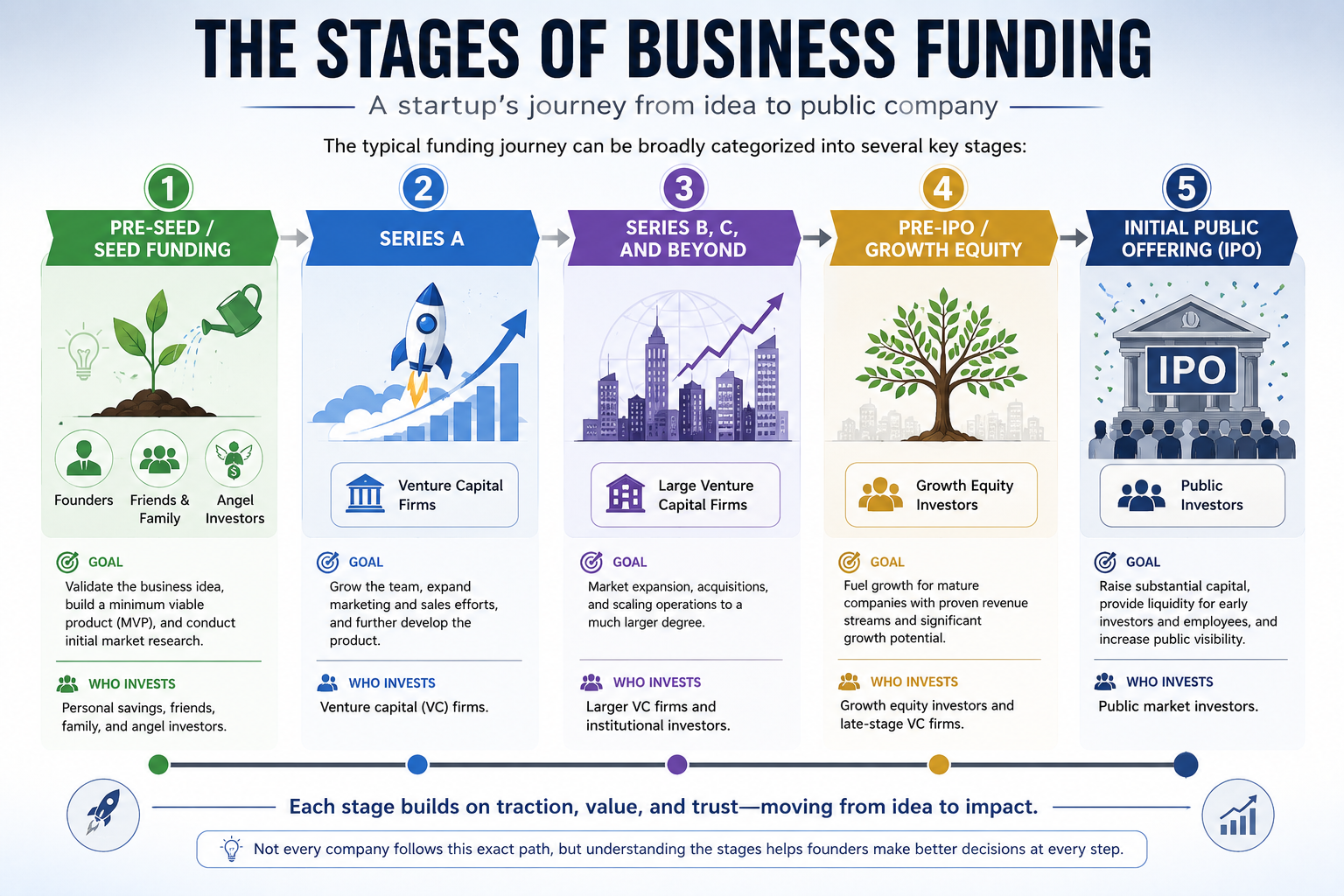
The typical funding journey can be broadly categorized into several key stages:
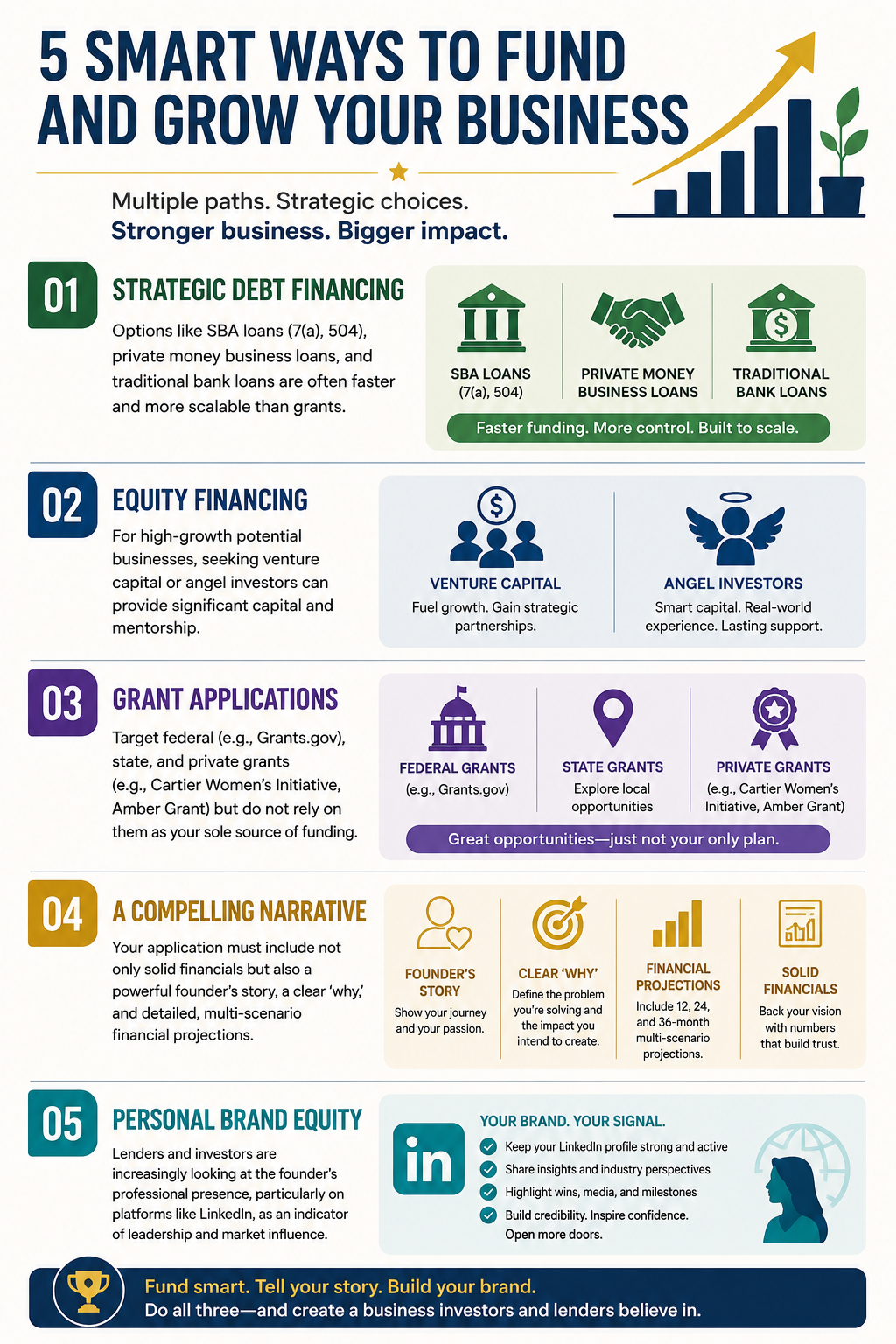
- Pre-Seed/Seed Funding: This is the earliest stage, often before a company has a fully developed product or significant revenue. Founders typically rely on personal savings, friends, family, and angel investors. The goal is to validate the business idea, build a minimum viable product (MVP), and conduct initial market research.
- Series A: Once a company has demonstrated product-market fit and has a scalable business model, it seeks Series A funding. This round typically comes from venture capital (VC) firms and is used to grow the team, expand marketing and sales efforts, and further develop the product.
- Series B, C, and Beyond: As the company continues to grow and achieve significant traction, it may raise subsequent rounds of funding (Series B, C, D, etc.). These rounds are usually led by larger VC firms and are used for market expansion, acquisitions, and scaling operations to a much larger degree.
- Pre-IPO/Growth Equity: Before a company goes public, it might raise growth equity from investors who are looking for mature companies with proven revenue streams but still significant growth potential.
- Initial Public Offering (IPO): An IPO is the process by which a private company becomes public by selling shares of its stock to the public for the first time. This allows the company to raise substantial capital, provides liquidity for early investors and employees, and increases public visibility. However, it also comes with increased regulatory scrutiny and reporting requirements.
Types of Investors
The landscape of investors is diverse, each with different motivations and investment criteria:
- Angel Investors: High-net-worth individuals who invest their own money, often in the early stages of a startup. They may also provide mentorship and industry connections.
- Venture Capitalists (VCs): Firms that invest pooled money from limited partners (like pension funds, endowments, and wealthy individuals) into high-growth potential startups. VCs typically invest in later stages than angels and seek significant returns.
- Private Equity (PE) Firms: These firms invest in more mature companies, often looking to restructure or improve operations to increase value before selling.
- Strategic Investors: Corporations that invest in startups that align with their business strategy, often for access to new technology or markets.
The Reality vs. Shark Tank
The primary difference between Shark Tank and real-world venture investing lies in the timeframe, due diligence, and the nature of the relationship. Shark Tank’s 20-minute pitches and on-the-spot decisions are highly unrealistic. In reality, investors conduct extensive due diligence, which includes scrutinizing financials, market analysis, competitive landscape, and the management team. Deals can take months to negotiate, with term sheets, legal reviews, and board approvals. Furthermore, real-world investors often take a more active, long-term role in guiding the company’s strategy, unlike the Sharks who primarily offer advice and capital.
What was the biggest failure on Shark Tank?
The biggest failure on Shark Tank is often considered to be Fubu founder Daymond John’s investment in the company Loyal, which was pitched by entrepreneur Samuel L. Jackson. The product was a high-tech dog collar that ultimately failed to gain traction in the market.
Who was the 11 year old girl that turned down a $30000000 Shark Tank deal?
Mikaila Ulmer.
Does Lori Greiner still own 20% of Scrub Daddy?
Yes, Lori Greiner still owns 20% of Scrub Daddy.
Are Mark Cuban and Kevin O’Leary still friends?
There is no public information confirming that Mark Cuban and Kevin O’Leary are currently friends. Their relationship is primarily professional, and they have had differing opinions on various business matters.